- Search
- Contact
Redchurch Street weavers’ tenements
-
Sectors:
CommercialListed Buildings
- Year: 2025
- Client: Truman Estates Limited
- Location: Shoreditch, London
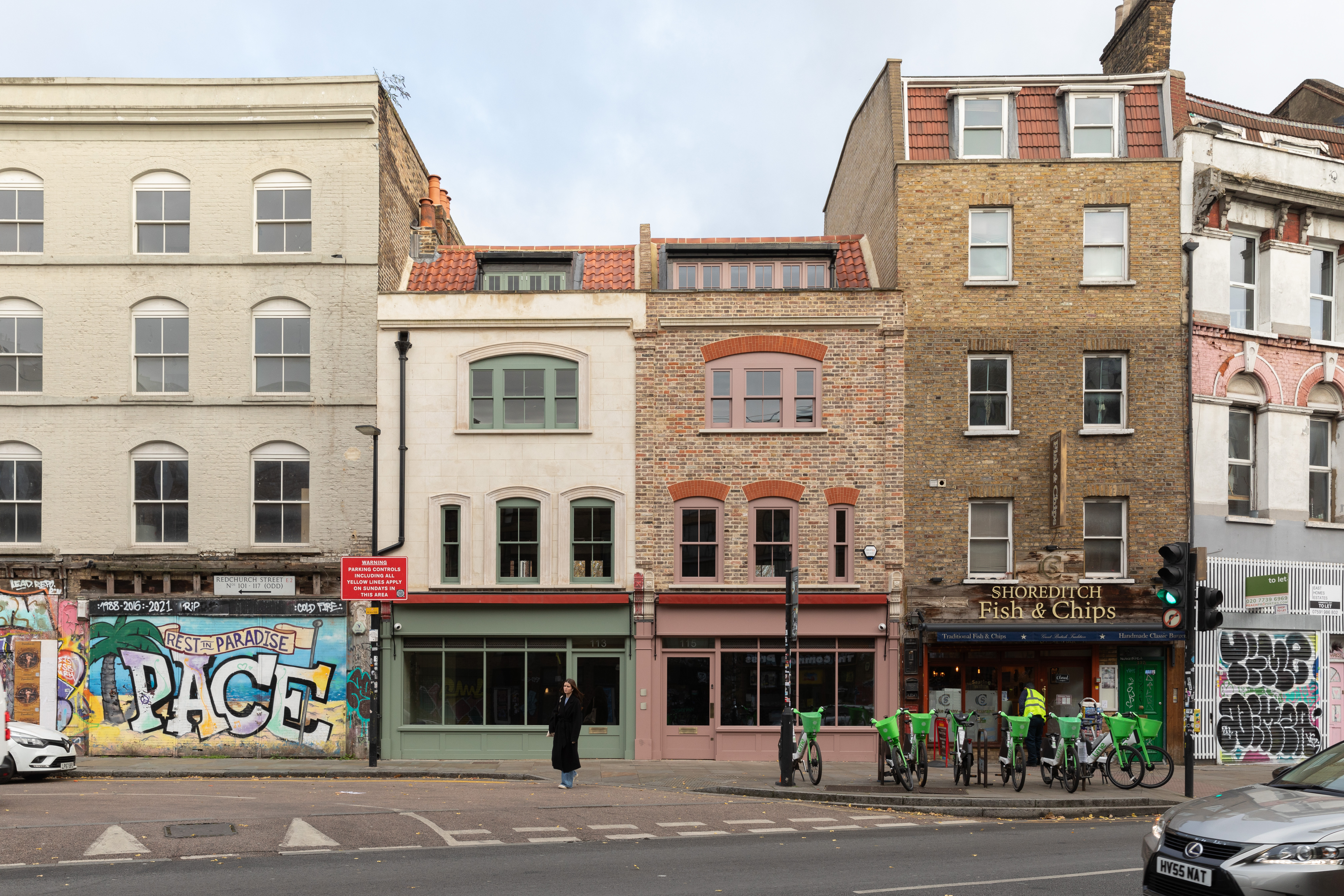
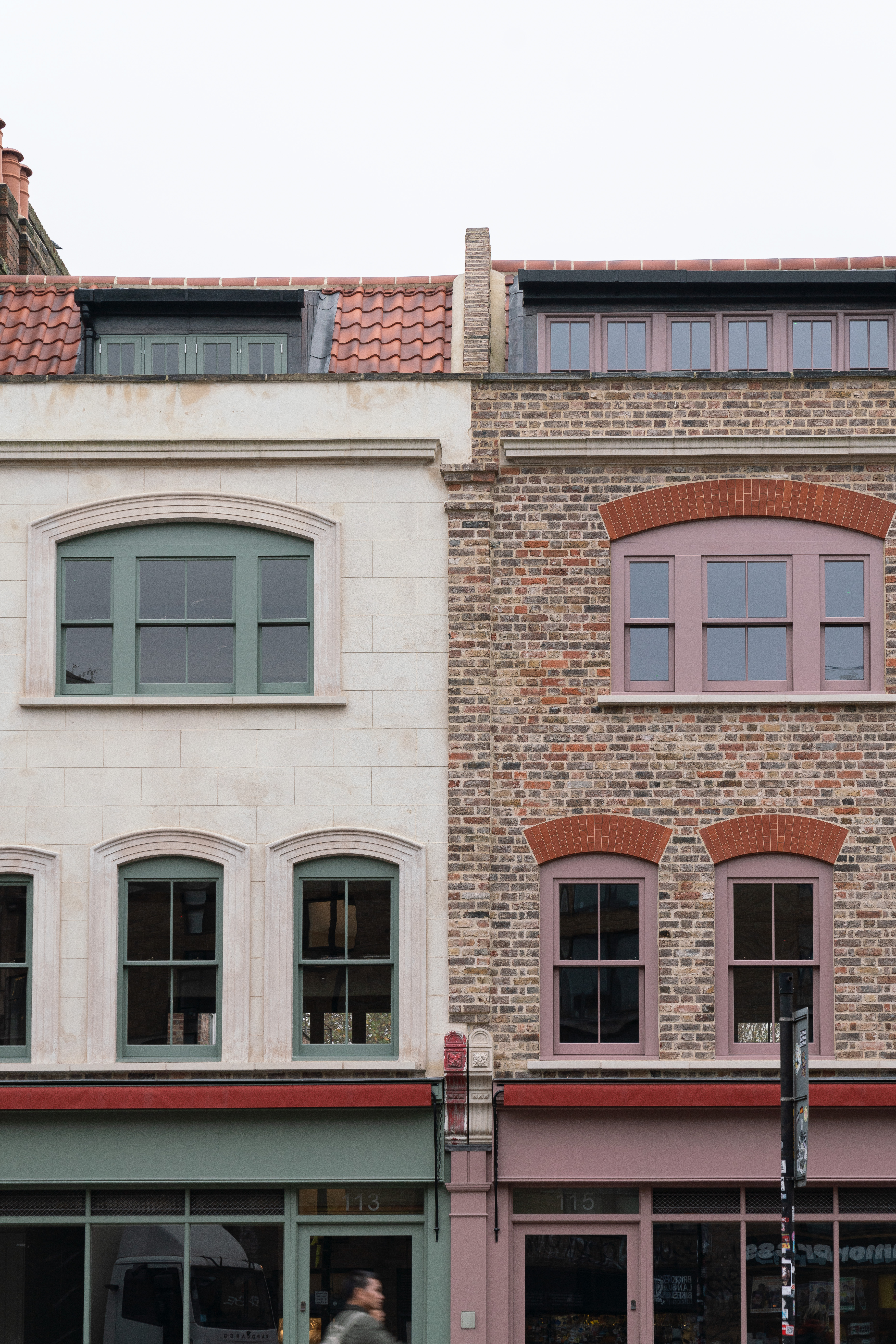
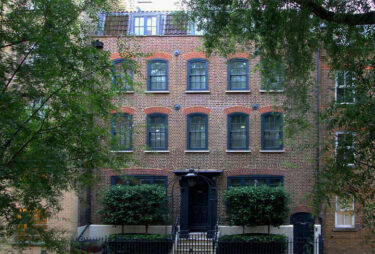
The Truman Brewery worked with Chris Dyson Architects to restore and bring new life to two derelict buildings at 113 & 115 Redchurch Street in Shoreditch, East London. One of these, number 113, is Grade II -listed and has been on Historic England’s Heritage at Risk register for 13 years. With the restoration complete and a new tenant in the building, ethical fashion brand, KOTN, the former weaver’s cottage is no longer at risk and has finally been removed from the register.
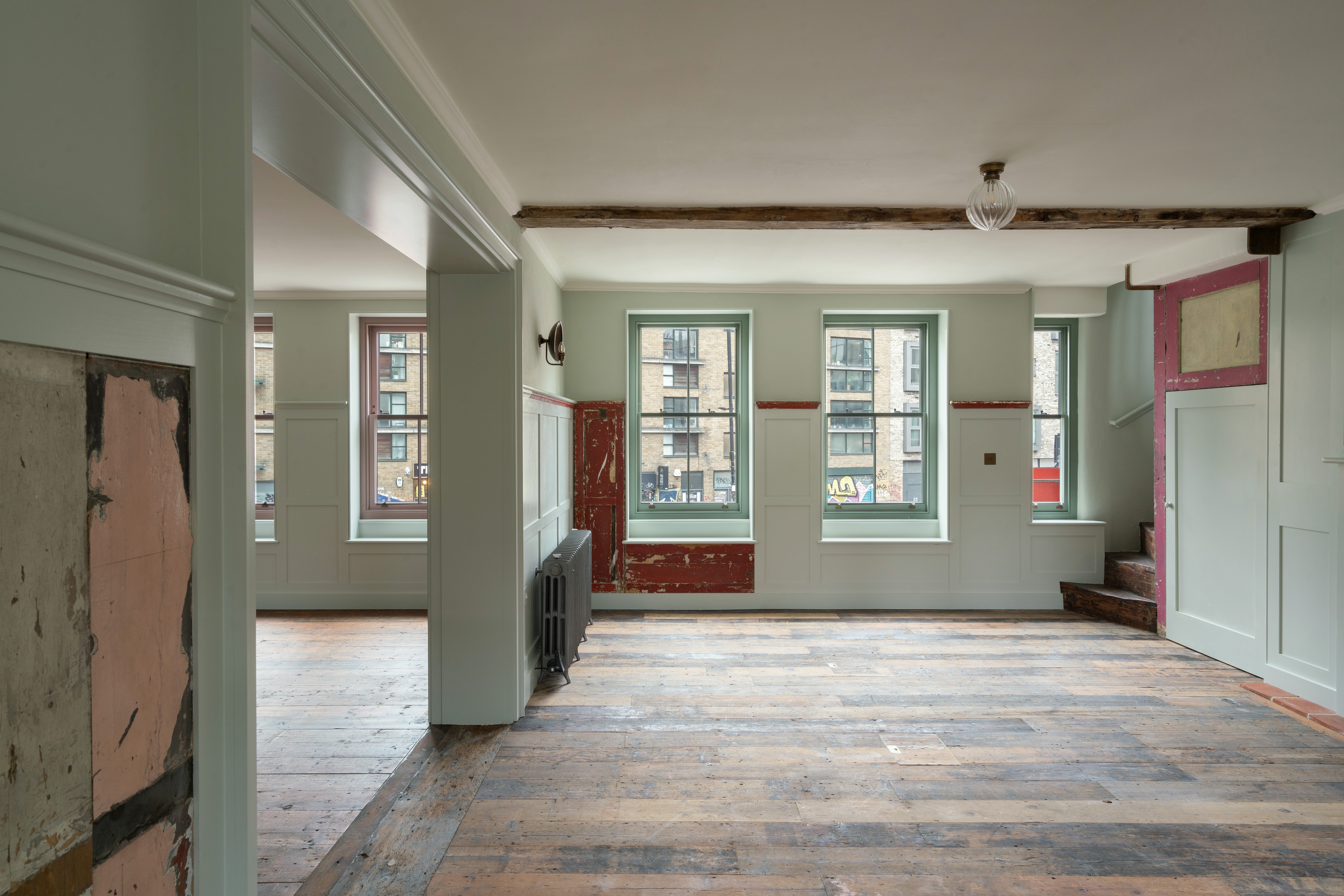
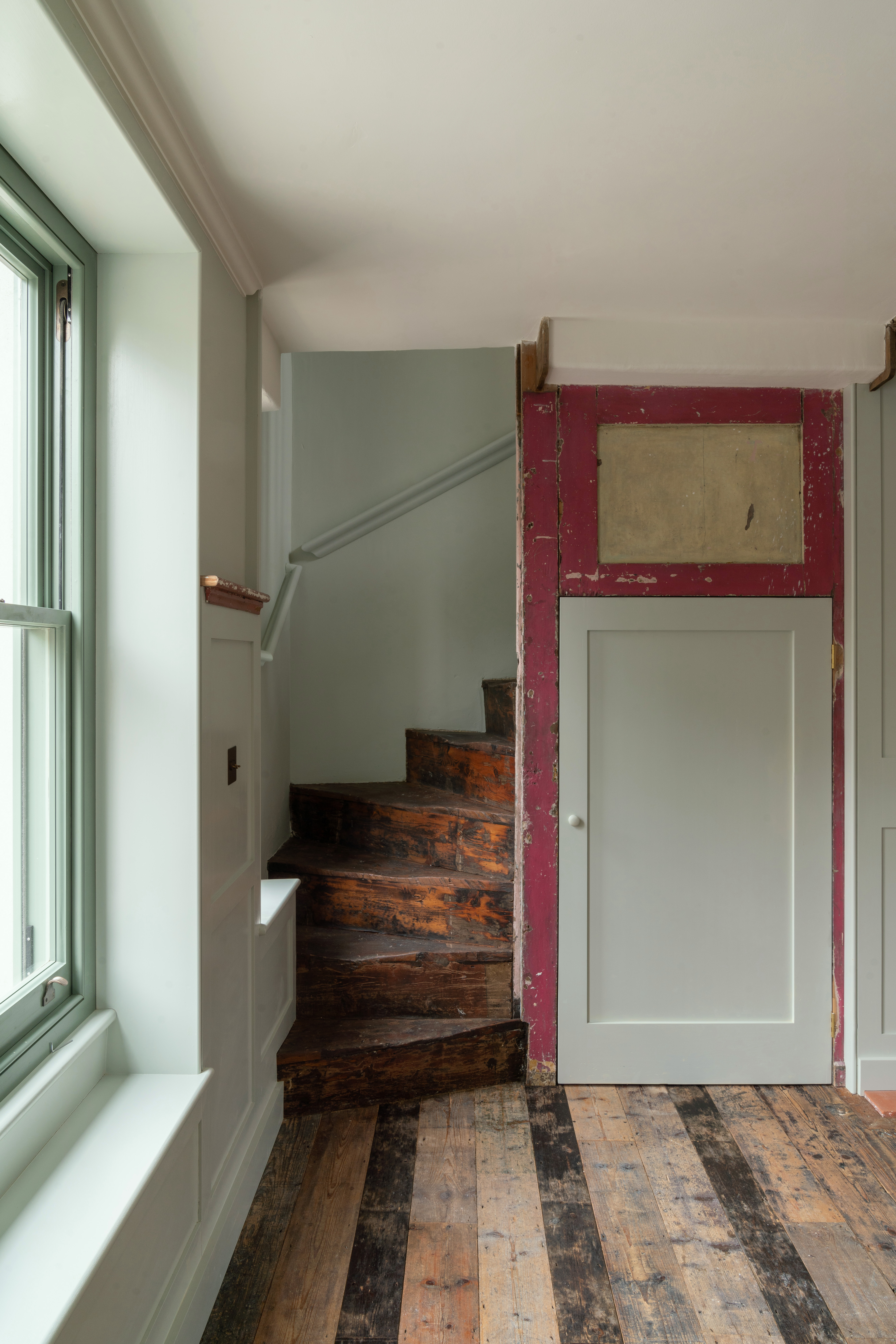
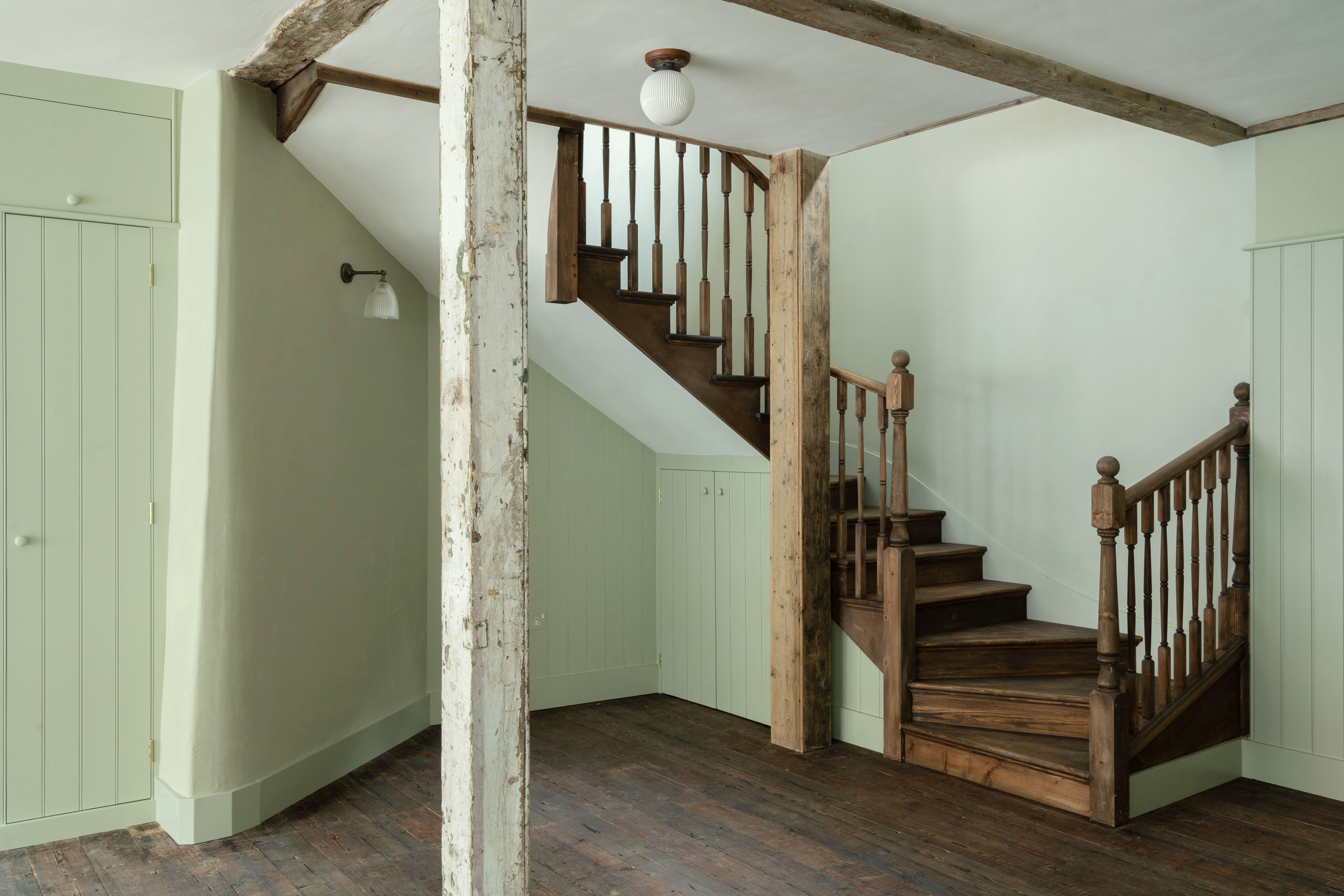
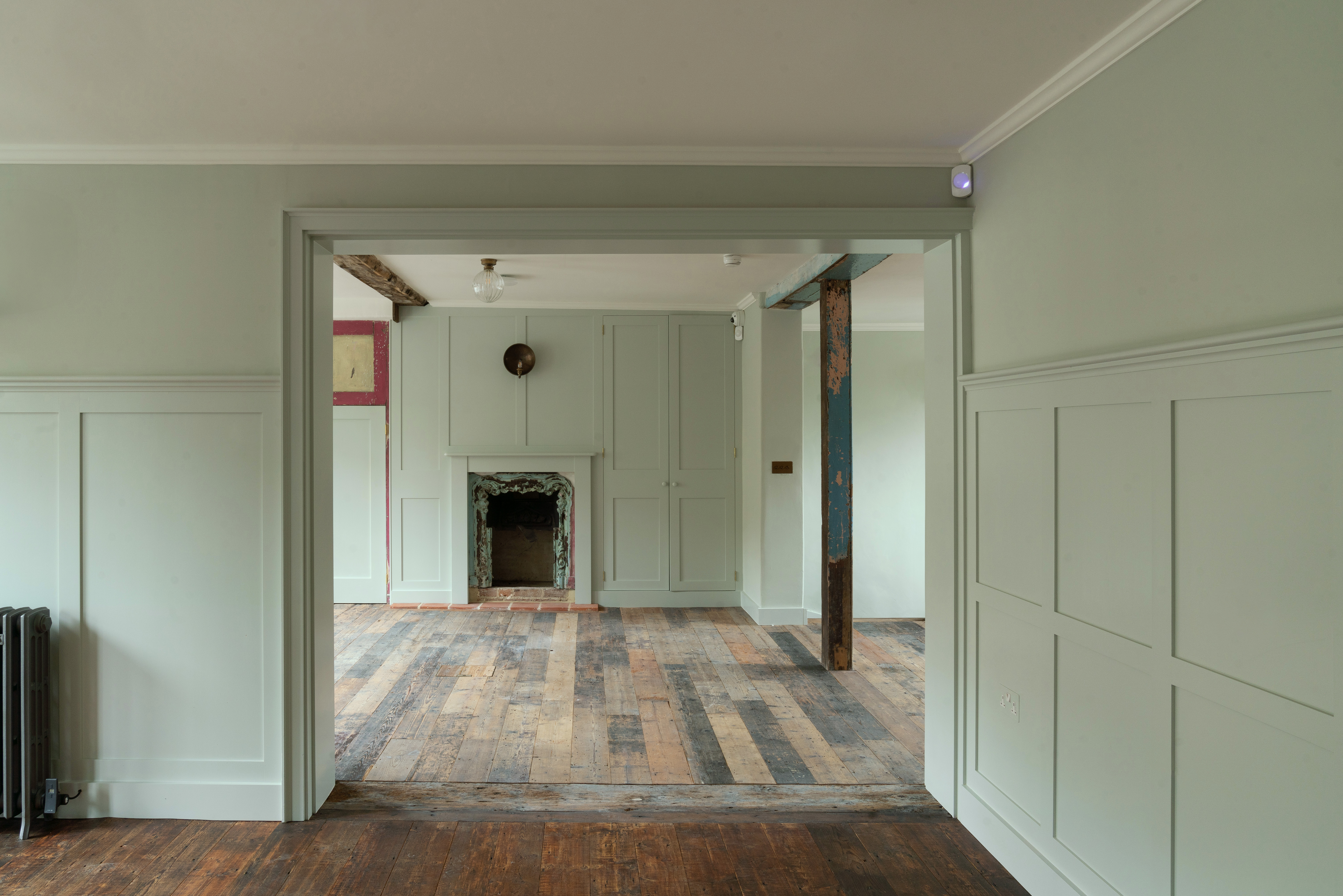
The five-year project was a labour of love and involved a careful process of analysis, repair and traditional craft skills. All materials that could be saved have been reused – in many places, the timber beams and panels retain their peeling paint, and the narrow, well-trodden stairs their creaks and character. These traces of history are preserved and revealed alongside finely crafted new joinery.
The pair of adjacent buildings had been derelict for many decades before the Truman Brewery acquired them. Number 113 was in a particularly perilous condition. It was constructed in 1735 as one of a row of weavers’ cottages by William Farmer, a local builder. The original weaving loft was just about still intact, although a previous fire on that floor had made it unsafe to enter. The front of the building was severely unstable and deemed a structural hazard. The front façade had weakened over time, its brickwork having untied and separated completely from the side elevation, with large sections at risk of collapse. In 2012, it was added to Historic England’s Heritage at Risk Register on account of its poor condition.
When the Truman Brewery bought the two properties, structural engineers, Alan Baxter Associates were engaged to assess the buildings and recommend necessary interventions. The restoration plan, developed by Chris Dyson Architects, prioritised safety and functionality, while aiming to retain as much of the building’s original character as possible. The Spitalfields Trust, Historic England and the London Borough of Tower Hamlets were consulted during the planning phase.
Given the urgency of the situation, the front elevation of 113 had to be partially dismantled and rebuilt, with temporary works installed to stabilise the building. Alongside these structural repairs came the careful removal and preservation of historic interior elements. Features such as staircases, skirtings, and timber panelling were methodically and painstakingly numbered and stored on-site at the Truman Brewery for conservation and later reinstallation. These efforts were closely monitored by Historic England, to confirm that the process met required heritage standards.
“These buildings, and the stories they tell of the lives of the weavers that lived there, are such an important part of East End history. This was a conservation project of some urgency, in terms of securing the façade. Then came the forensic process of analysis and rescuing individual elements; finding a way to express this history in a way that would made sense in the buildings’ future and support new uses.” – Chris Dyson
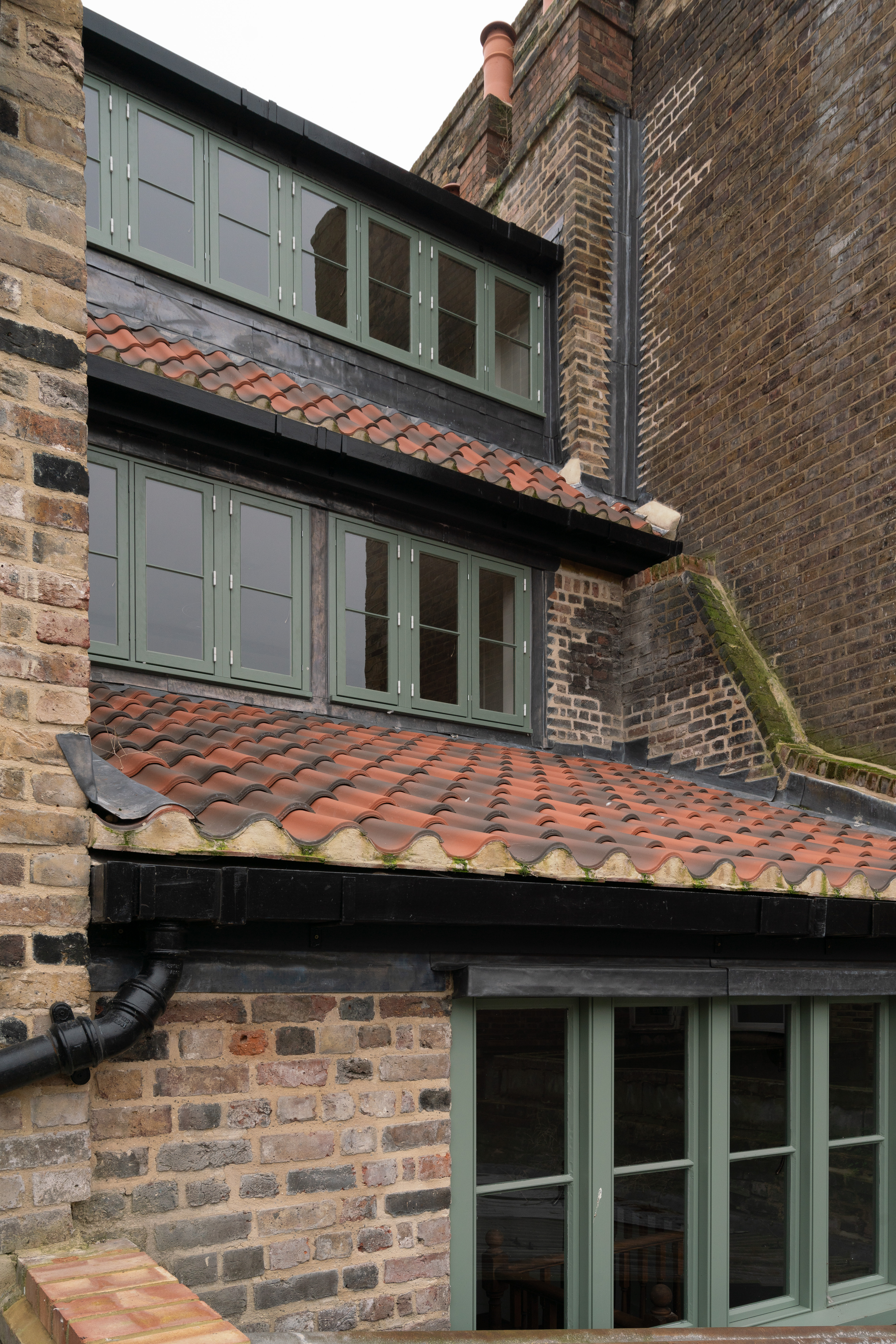
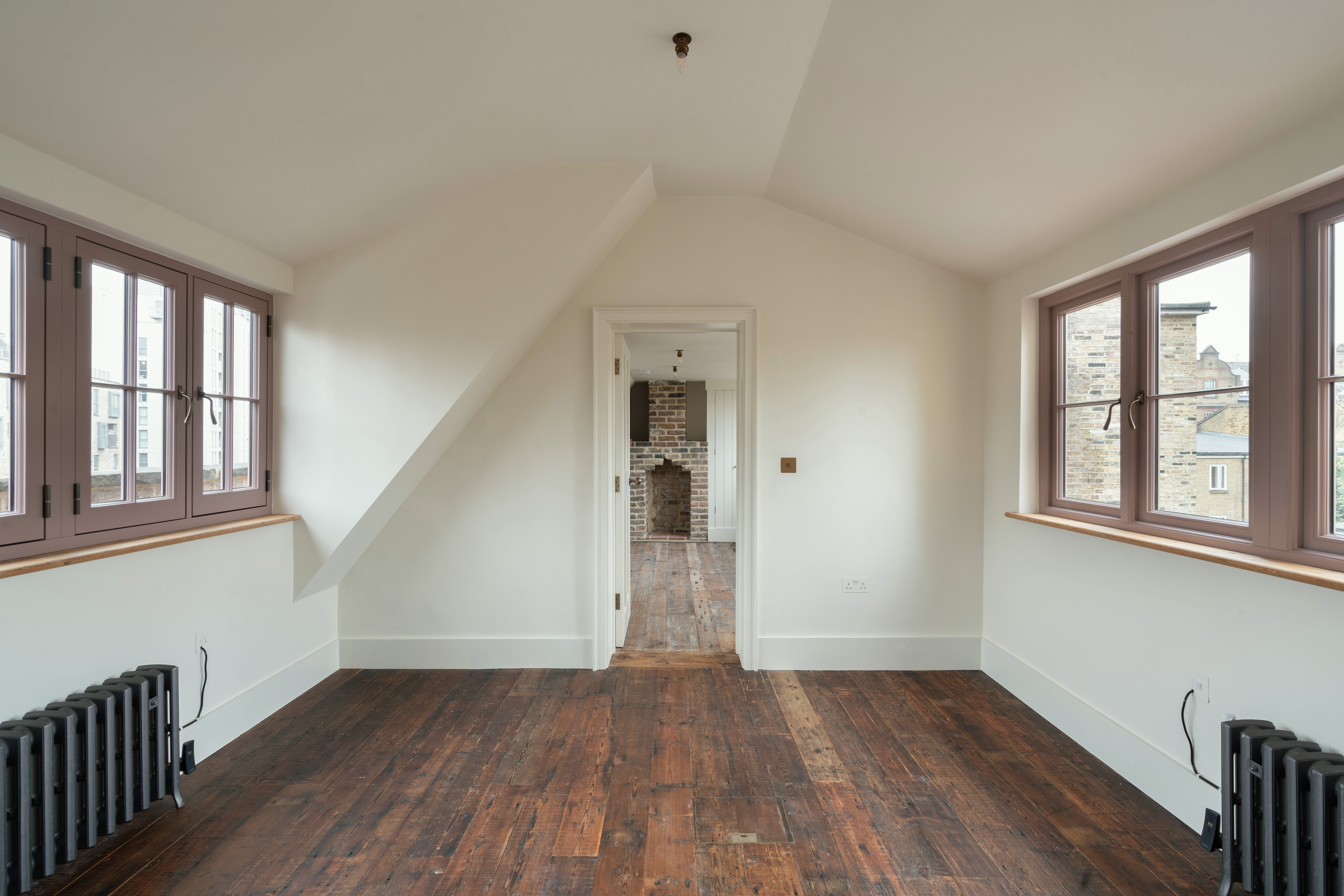
The restoration also included safety and environmental updates, such as applying intumescent paint to the original timbers to meet fire regulations, a necessary step in bringing the building up to current standards without compromising its historic fabric. To improve energy performance, lime mortar and render were added to the exterior, the windows were double glazed and insulation was added behind panelling and in the roof.
The project drew on traditional techniques, such as lath and plaster, and has been finished to the highest restoration standards by Fullers, a family-run building company that in 2022 celebrated its 150th anniversary. They added: “Sitting derelict and exposed to the weather for many years, some original material had decayed, but amazingly (in 113) some original timber and joinery as well as a large amount of the original brick walling remained intact, just needing some TLC and repair. Our task was to record and dismantle the building as necessary and rebuild it with as much salvage material as possible in its original design.”
“We’re delighted to see the rescue and repair of these former weavers’ cottages. These small houses, built specifically for artisans and labourers as live-work spaces, were the beating heart of eighteenth-century London. The owners have done an excellent job bringing these buildings back from the brink, creating a thriving and sustainable future for this slice of Shoreditch’s history.” – Lisa Rigg, Heritage at Risk Projects Officer at Historic England
Credits:
- Owner & developer: Truman Estates Limited
- Architecture: Chris Dyson Architects
- Chris Dyson Architects design team: Chris Dyson, Mathew Witts, Victoria Broom, Korin Steinbok, Diana Raican
- Structural, civil: Alan Baxter Associates
- Contractor: Fullers Builders
- Temporary structural propping works: STAP (Paul Shoda)
- MEP engineer: E+M Technica
- Fire safety: CWB Fire Safety (Phil Barry)
- Heritage consultants: Chris Dyson Architects, with Historic England and London Borough of Tower Hamlets conservation team
- Cost consultants and Contract Administrators: PTP (Colin Hayward)
- Building Control: London Building Control
Facts & figures
- Location: Redchurch Street, Shoreditch, London
- Appointment year: 2019
- Completion November 2024, let 2025, due to open in spring
- Building type: Commercial, Class E
- Site area: 144sqm
- Floors: 4 above (and including) ground
- Budget: £2 million
- BREEAM: Not currently applied
- The buildings are adaptable in terms of Class E use, designed initially for a mix of office and retail, but with the flexibility to accommodate residential or cultural functions in future. Externally, the two cottages are clearly articulated as two buildings, differentiated by pink and pale green timber detailing. Internally, they have been connected laterally, and, to the rear of the un-listed number 115, new terraces provide valuable outdoor amenity space.